82% of Indians Have Dropped Their Phones at Least Once: OneAssist-Hansa Study
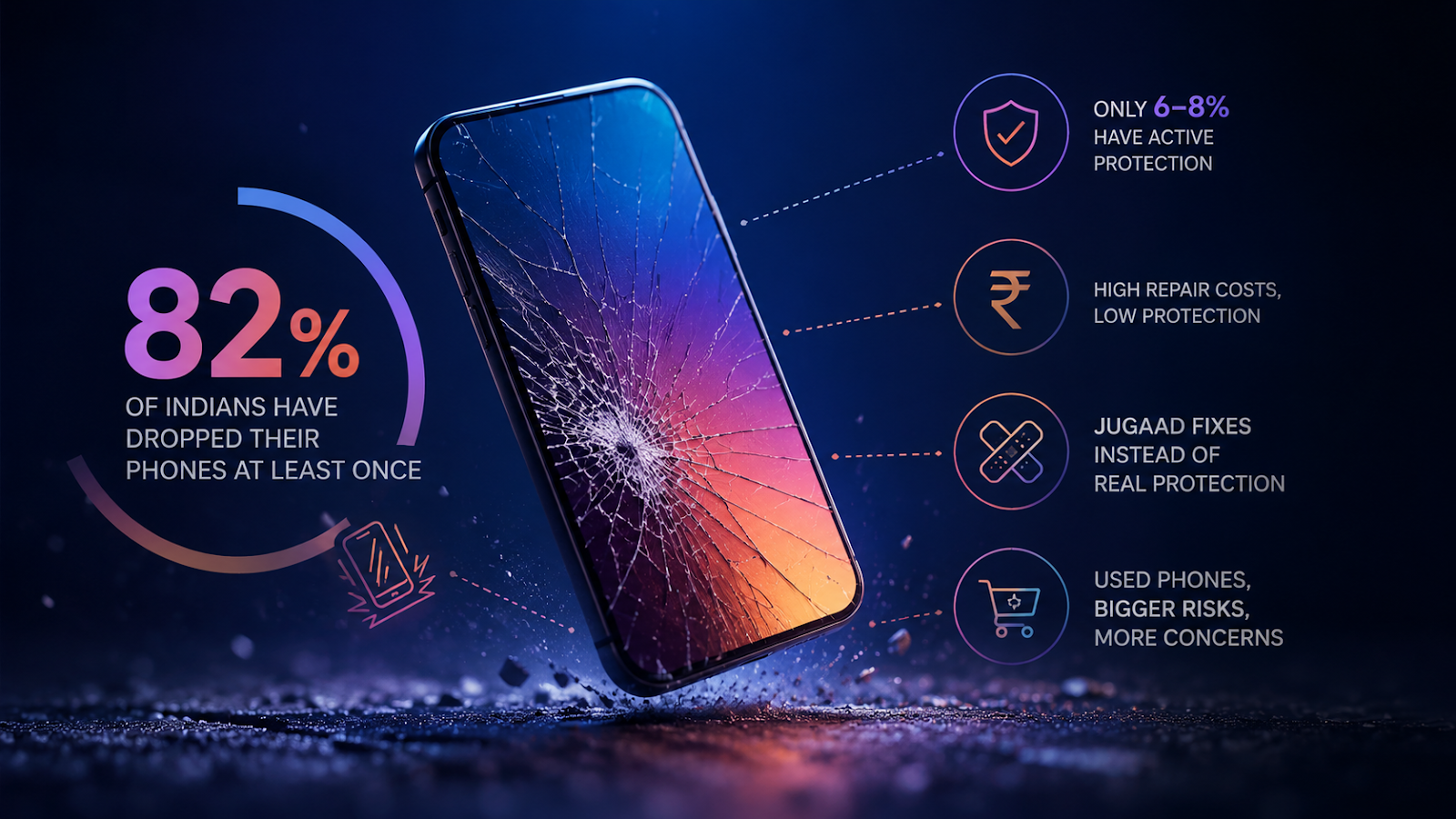
82% of Indian smartphone users have dropped their phones at least once, with cracked screens among the most common consequences. A new OneAssist-Hansa Research study reveals a growing gap between smartphone dependence and protection, as only 6–8% of users currently have active coverage.
For most smartphone users, dropping a phone is one of those everyday accidents that can happen in seconds. A phone slips from a pocket, falls out of a bag or tumbles from a table, and suddenly a routine day can turn into an expensive repair job.
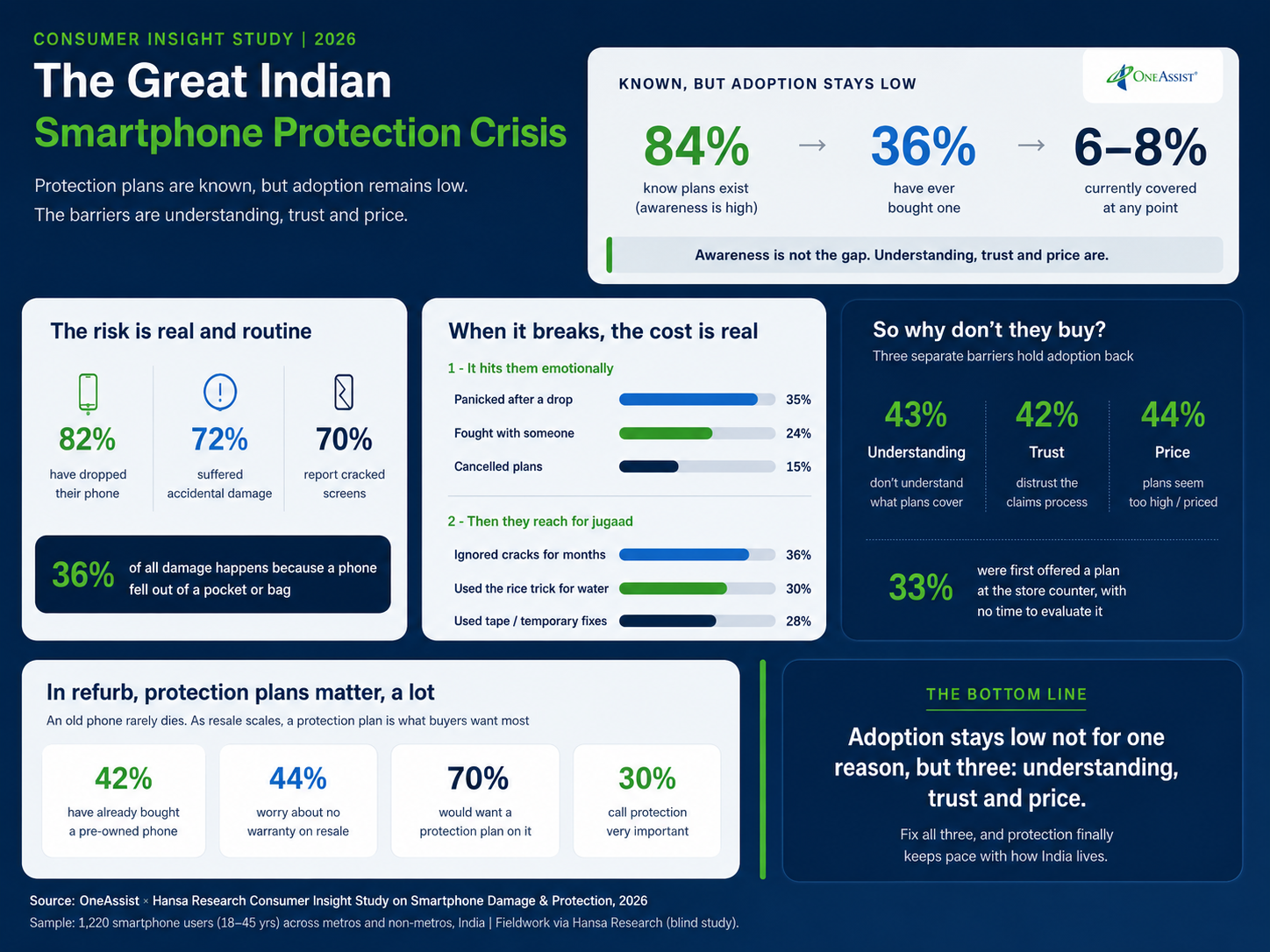
A new consumer study by OneAssist and Hansa Research suggests just how widespread the problem is. Titled The Great Indian Smartphone Protection Crisis, the study found that 82% of Indian smartphone users have accidentally dropped their phones at least once. The research looks beyond broken screens and repair bills, examining how Indians use their smartphones, what happens when devices are damaged and why so many consumers remain without any form of protection.
Pocket and bag slips are the biggest culprit
According to the study, everyday movement is responsible for a significant share of smartphone accidents. Around 36% of incidents were linked to phones slipping out of pockets or bags. Cracked screens emerged as the most common type of damage. For consumers who rely on their phones for everything from payments and shopping to entertainment and communication, even a seemingly minor accident can quickly become disruptive.
And the impact isn’t always financial.
More than a third of respondents, or 35%, said they panicked immediately after dropping their phone. Nearly a quarter said a phone accident had led to an argument with someone, while 15% said they had cancelled plans because of the resulting damage.
Women report a bigger emotional and physical impact
The study also highlights a noticeable gender gap in smartphone accidents. Around 43% of women said they panicked after dropping their phones, compared with 33% of men. Women were also more likely to report having accidentally dropped and damaged their devices. According to the research, 94% of women surveyed had dropped a phone accidentally, compared with 80% of men. Similarly, 79% of women said they had experienced phone damage, compared with 71% of men. The numbers suggest that smartphone accidents aren’t simply isolated inconveniences. For many users, they can have an emotional and practical impact as well.
Most users still don’t have protection
Despite the frequency of these incidents, smartphone protection remains relatively uncommon. The study found that 36% of respondents had used some form of phone protection plan at some point. However, only around 6% to 8% currently have active coverage. Cost is one of the major barriers. Consumers also cited uncertainty about what protection plans actually cover and concerns about the claims process as reasons for avoiding them. That leaves a significant gap between how heavily Indians depend on their smartphones and how prepared they are for something going wrong.
When insurance isn’t an option, jugaad takes over
The study also captures a distinctly Indian response to damaged technology: jugaad. Nearly 30% of respondents said they had tried the familiar rice trick after accidentally getting their phone wet. Between roughly one-fifth and one-third of respondents said they had used tape or similar temporary fixes to keep damaged phones functioning. These quick fixes may help users get through the day, but they also highlight how consumers often try to extend the life of a damaged device rather than immediately pay for a repair or replacement.
Used phones bring another protection question
Smartphone protection becomes even more relevant as India’s pre-owned smartphone market grows. Around 70% of respondents believe protection is more important for a used smartphone than a new one. Meanwhile, 30% said having a warranty would make them more likely to buy a second-hand phone. The study also found a notable difference between metro and non-metro consumers. While 54% of non-metro respondents said they had purchased a pre-owned smartphone, the figure stood at 30% among metro consumers. That suggests protection could become an increasingly important factor as more consumers look towards refurbished and second-hand devices.
India’s most phone-dependent users are aged 26 to 30
The research identifies the 26-to-30 age group as the most dependent on smartphones overall. This group relies heavily on their devices for digital payments, shopping, entertainment and staying connected. As smartphones become more expensive and consumers hold on to them for longer, accidental damage can carry a bigger financial and practical cost. With India’s smartphone user base now exceeding 650 million and ownership cycles extending beyond three years, the consequences of a damaged device can be significant.
“There’s a clear gap between how much consumers depend on their smartphones and how few actually protect them,” said Subrat Pani, Co-founder of OneAssist.
Pani said affordability, simplicity and trust are key areas the device protection industry needs to address if it wants consumers to adopt protection plans more widely.
The smartphone protection gap is getting harder to ignore
The findings point to a simple contradiction in India’s smartphone market. Consumers are increasingly dependent on their phones, keeping them for longer and using them for more aspects of everyday life. Yet only a small proportion have active protection against the accidents that can leave those devices unusable. A dropped phone may take only a second to damage, but replacing or repairing it can have consequences that last much longer. As smartphones become more expensive and increasingly central to everyday life, protection may gradually shift from being an optional add-on to becoming a more important part of smartphone ownership.