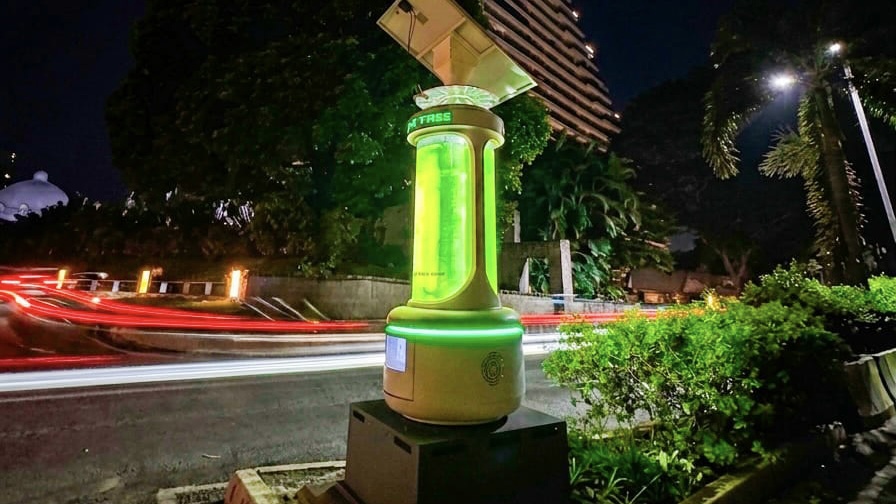
Mushroom World Group’s AlgaeTree has expanded from public installations to the IOCL Gujarat Refinery and Amanora Park Town, marking a significant step for India’s emerging carbon capture ecosystem. The microalgae-based system is also attracting interest from international markets, including the UAE and Malaysia, as the company eyes broader expansion.
Mushroom World Group’s microalgae-based carbon capture technology is moving beyond public spaces and into industrial and residential developments, with interest now emerging from international markets including the UAE and Malaysia.
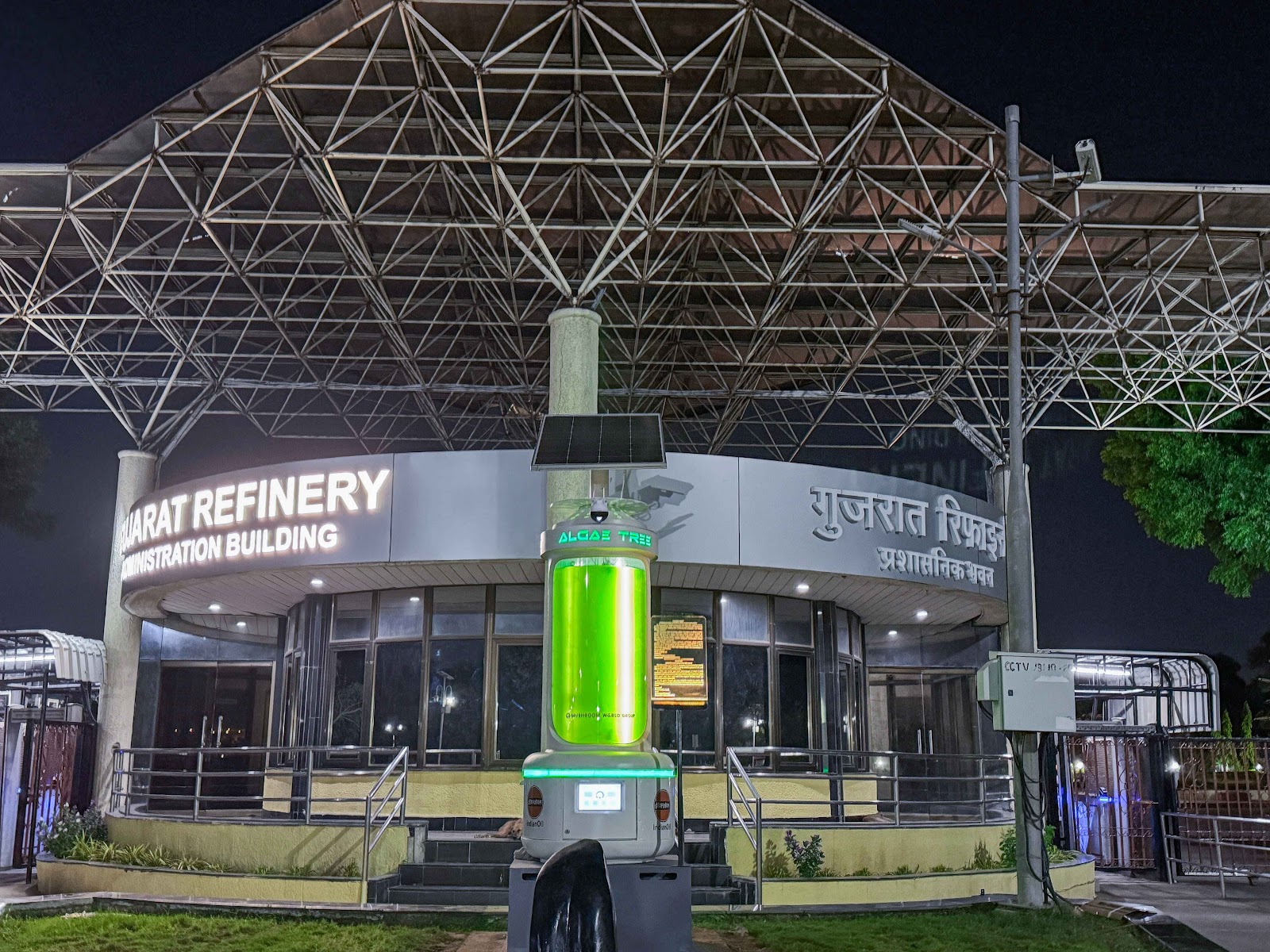
AlgaeTree, the Bhopal-based photobioreactor system developed by Mushroom World Group, has expanded its footprint from parks and public infrastructure projects to two notable installations: the Indian Oil Corporation Limited (IOCL) Gujarat Refinery campus in Vadodara and Amanora Park Town, a premium township in Maharashtra.
The expansion marks an important milestone for the company. Deployments at an active refinery and a large mixed-use township suggest growing confidence in the technology’s ability to operate in environments where emissions management and sustainability commitments are increasingly under scrutiny.
What Is AlgaeTree?
AlgaeTree is a photobioreactor system that uses dense microalgae cultures to capture ambient or flue-gas carbon dioxide. Through photosynthesis, the microalgae convert CO2 into oxygen and biomass, which is subsequently repurposed into products such as biopellets and fertilizers.
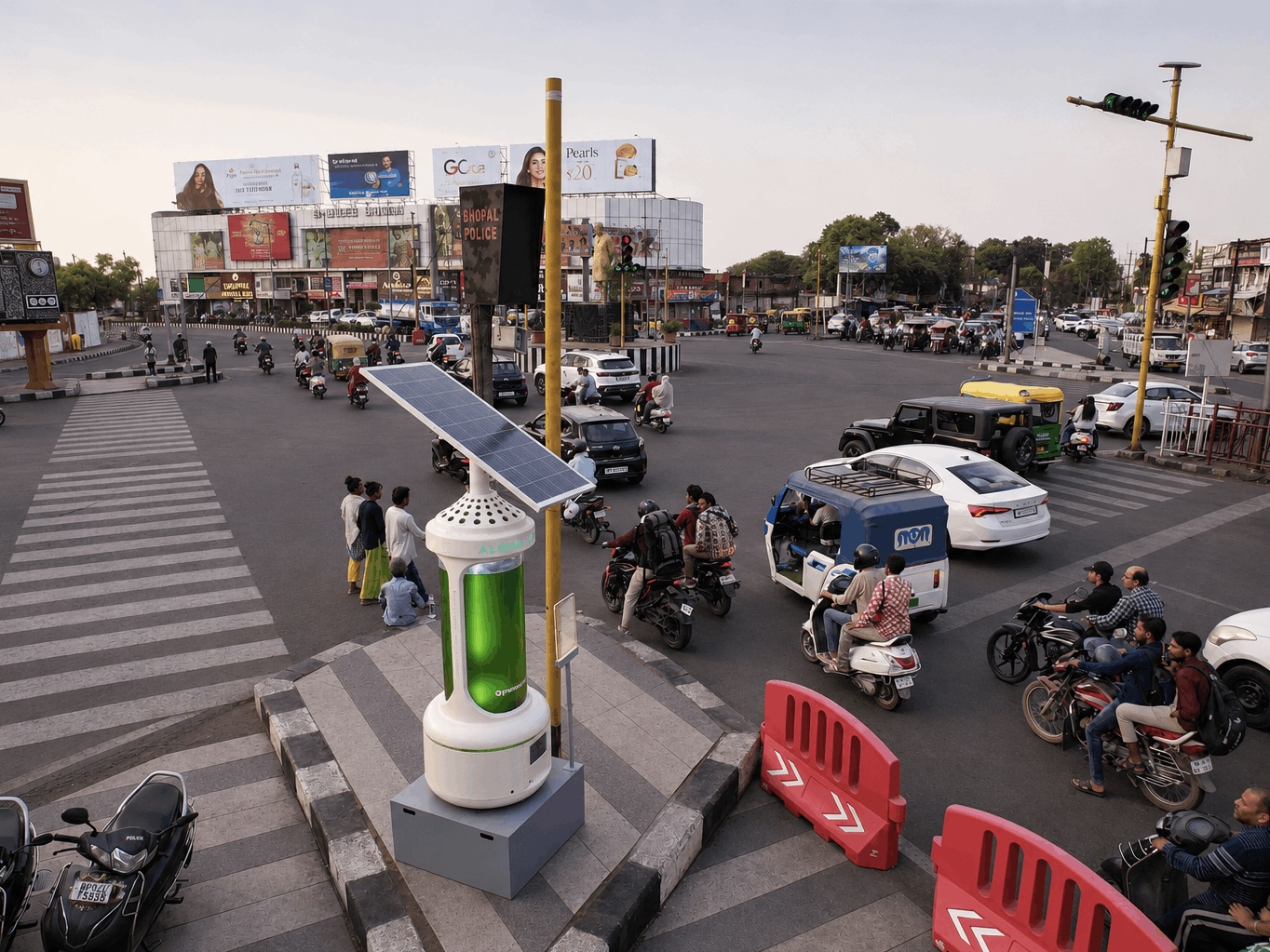
According to the company, each unit can absorb up to 1.5 tonnes of carbon annually—equivalent to approximately 25 years of carbon absorption by a mature tree. The proposition is particularly relevant for urban environments, where large-scale afforestation is often constrained by limited space.
The system is solar-powered and continuously monitored using AI-driven analytics. Mushroom World Group positions AlgaeTree as a complementary solution to traditional tree planting efforts and aligns its mission with India’s goal of achieving net-zero emissions by 2070.
India’s Emerging CCUS Story
AlgaeTree is being positioned by Mushroom World Group as India’s first commercialized Carbon Capture, Utilisation, and Storage (CCUS) solution, reflecting the early-stage nature of the country’s carbon capture ecosystem.
The company says it is receiving interest from industrial operators, real estate developers, educational institutions, and public infrastructure stakeholders across India, while also fielding inquiries from potential partners in the UAE and Malaysia.
Mushroom World Group was founded in 2024 by Shakti Sagar and Sameer Sagar. The venture’s technical operations are led by CTO Prateek Maheshwari and COO Vaibhav Shrivastav, supported by a team of more than 50 scientists, researchers, and engineers. The company says the technology is the result of over two years of research and development.
Speaking about the company’s vision, Co-founder Sameer Sagar said organizations are increasingly looking for measurable climate outcomes rather than symbolic sustainability initiatives. Co-founder Shakti Sagar highlighted ambitions to scale AlgaeTree across Indian cities and expand into international markets as a Made-in-India climate technology offering.
What’s Next?
Mushroom World Group says it is developing compact indoor variants of AlgaeTree for offices, hotels, hospitals, schools, premium residences, and airports, alongside customized deployments for transportation hubs.
Its R&D roadmap includes export-focused models, hybrid renewable-powered systems, enhanced monitoring capabilities, and an ion-based air treatment technology currently under testing.
The company is also aligning its positioning with broader policy initiatives, including the National Clean Air Programme, the Smart Cities Mission, and the United Nations Sustainable Development Goals related to climate action and sustainable urban development.
As India works toward its long-term climate targets, technologies that can capture carbon at the point of emission may become an increasingly important part of the country’s sustainability toolkit. Whether microalgae-based systems can scale meaningfully remains to be seen, but AlgaeTree is attempting to make the case that carbon capture can be compact, modular, and deployed where traditional green infrastructure cannot.