
WhatsApp is steadily moving beyond messaging, and its latest bill-payment launch in India raises a bigger question: is it becoming the new CRED under Kunal Shah? With bill payments, recharges and other everyday services moving into the app, WhatsApp is positioning itself as an increasingly important digital utility for Indian users.
WhatsApp has long been the app Indians open to chat, share photos, speak to businesses and increasingly, get things done. But its latest move in India suggests that Meta wants WhatsApp to become something much bigger: a daily utility and payments destination.
The timing is particularly interesting because CRED founder Kunal Shah was appointed global head of WhatsApp earlier this year, while Meta simultaneously invested $900 million in CRED. Shah is succeeding Will Cathcart, who is moving to a new product-building role within Meta.
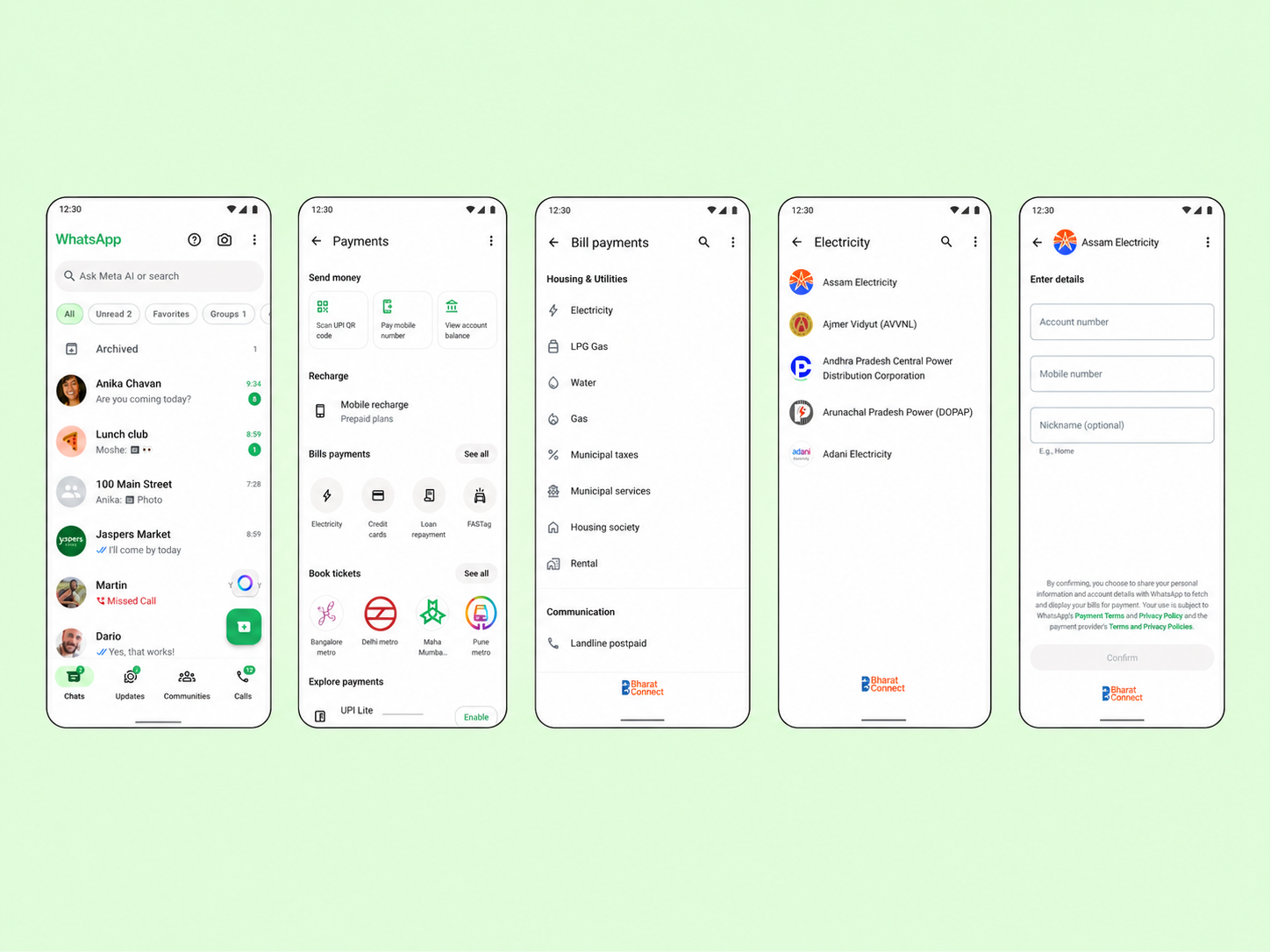
Now, WhatsApp has launched Bill Payments in India, allowing users to pay everyday household bills without leaving the app. The feature is powered by the Bharat Connect (BBPS) network and provides access to 22,722 billers across 30 categories, including electricity, gas, water, FASTag, insurance, credit-card payments and loan repayments.
WhatsApp is Moving Beyond Payments
This isn’t WhatsApp’s first attempt at becoming a financial utility. Meta has already expanded the app’s capabilities in India to include services such as UPI payments and prepaid mobile recharges.
In April, WhatsApp introduced prepaid mobile recharges for Jio, Airtel and Vi, with a ₹ icon providing access to payments, recharges and metro-ticketing services.
The new bill-payment feature takes that strategy another step forward. Users can tap the ₹ icon at the top of the WhatsApp home screen, select a bill category and biller, enter their account details, review the fetched bill and pay using UPI, a debit card or a credit card.
WhatsApp is also building some of the convenience typically associated with dedicated payment and bill-management apps. Bills can be pre-fetched, previously paid billers can appear on the Payments Home screen for one-tap access, and multiple accounts under a single biller can be managed together.
So, Where Does Kunal Shah Fit In?
This is where the appointment of Kunal Shah becomes particularly intriguing.
Shah built CRED around a relatively simple idea: take an existing financial behaviour and make the experience more engaging and rewarding. Meta’s decision to put that kind of consumer-fintech experience at the top of WhatsApp comes as the messaging platform looks to expand beyond conversations.
Meta’s $900-million investment in CRED and Shah’s appointment were announced together. Shah is stepping away from CRED’s day-to-day operations while retaining his stake, with Miten Sampat taking over as interim CEO.
That doesn’t mean WhatsApp is literally becoming CRED. In fact, the two products have very different starting points. CRED is a fintech platform built around financial services and consumer engagement, while WhatsApp’s enormous advantage is its existing user base and frequency of use.
The more interesting possibility is whether Shah can apply the consumer-fintech playbook he developed at CRED to WhatsApp’s much larger ecosystem.
From Chat App to Everyday Utility
WhatsApp itself is clearly moving in this direction.
Meta says people in India already use WhatsApp for mobile recharges, metro tickets, insurance and citizen services. The company describes bill payments as another high-frequency task that can now be completed within the same familiar interface.
And that’s strategically important.
Instead of asking users to open one app for messages, another for payments, another for recharges and another for bills, WhatsApp is trying to make those activities available from the place where users already spend a significant amount of their digital lives.
This is the super-app direction: communication becomes the entry point, while payments, commerce, services and eventually more financial products sit around it.
Could WhatsApp Challenge CRED, PhonePe and Google Pay?
For now, it would be premature to say WhatsApp is replacing dedicated fintech platforms.
WhatsApp’s new bill-payment feature primarily removes the need to switch apps for routine payments. Dedicated platforms such as PhonePe, Google Pay and CRED have much broader financial ecosystems and specialised features.
But WhatsApp has something that most fintech apps have had to work hard to build: habit.
The company says its bill-payment system will gradually roll out across India and become available to Android and iOS users over the coming weeks.
If users begin paying electricity bills, recharging phones, buying tickets and interacting with businesses from WhatsApp, the distinction between a messaging app and a payments app starts to disappear.
The Bigger Question for Kunal Shah
The real question isn’t whether WhatsApp becomes another CRED.
It is whether Kunal Shah can turn WhatsApp into something that CRED could never be: a financial and commerce layer sitting on top of an app used by hundreds of millions of Indians.
Meta’s investment in CRED gives the company a deeper relationship with Shah and his fintech ecosystem, while putting him in charge of WhatsApp gives that relationship a much larger canvas. Meta has explicitly positioned Shah’s consumer-tech and fintech experience as an asset as he takes on the messaging platform.
WhatsApp’s latest bill-payment launch therefore looks less like an isolated feature and more like another piece of a much larger puzzle.
WhatsApp may not be the new CRED. Under Kunal Shah, it could be trying to become the place where CRED-like financial behaviour, payments, commerce and everyday services all converge.
And if that happens, the biggest change may not be what WhatsApp adds to its app — but how many other apps Indians eventually stop needing to open.