Beyond Roads and Bridges: India’s Next Infrastructure Push Is AI, Chips and Quantum Computing
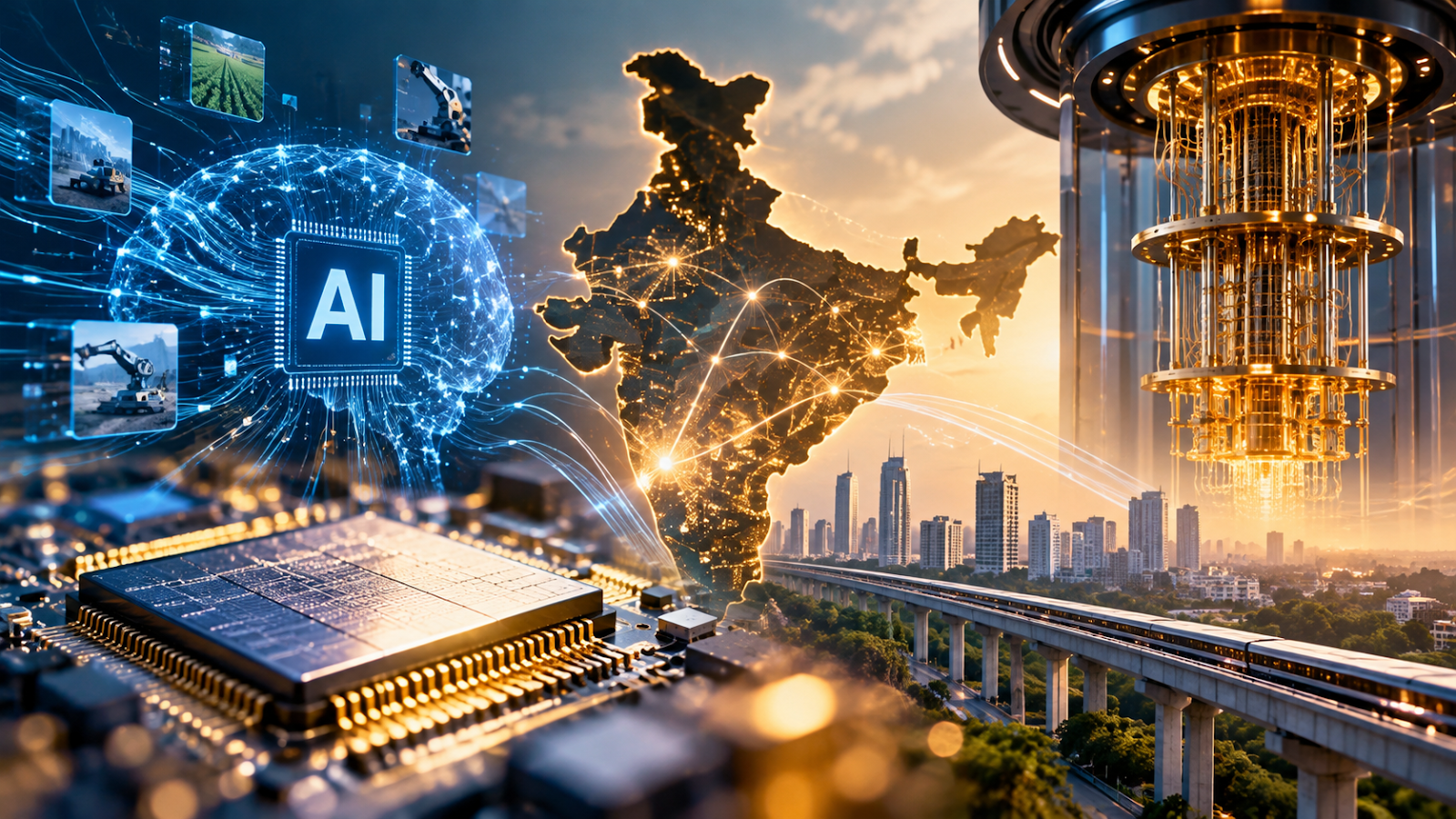
India’s next infrastructure wave could be shaped by AI, semiconductors and quantum computing, with Finance Minister Nirmala Sitharaman calling for greater investment and wider AI adoption among Indian businesses.
Finance Minister Nirmala Sitharaman has said India’s next phase of infrastructure development must look beyond traditional physical infrastructure, with artificial intelligence, semiconductor manufacturing and quantum computing emerging as key strategic priorities.

Speaking at IITMAA Sangam 2026 in Bengaluru, Sitharaman also called for wider adoption of AI among India’s micro, small and medium enterprises (MSMEs), arguing that the technology will be increasingly important for improving productivity and helping Indian businesses compete globally. The seventh edition of the IIT Madras Alumni Association’s flagship annual conference concluded on September 28. Held under the theme “Atmanirbhar Bharat – Building a Self-Reliant India,” the event brought together policymakers, technology leaders, academics, startups and industry executives to discuss India’s technology and economic ambitions.
AI and Chips Seen as the Next Infrastructure Priority
Sitharaman pointed to the opening of sectors such as space to private companies as an example of how policy changes can create opportunities for startups and entrepreneurs in strategically important industries. She said the next wave of major infrastructure investment should focus heavily on AI, semiconductor chips and quantum computing. The Finance Minister also highlighted the importance of bringing AI into India’s vast MSME ecosystem, which spans sectors ranging from component manufacturing to aerospace. She said these businesses will need to adopt AI to improve productivity and remain competitive in global markets. At the same time, she stressed the need for patient capital and new early-stage funding mechanisms for deep-tech and hardware startups, where development cycles can be significantly longer than those of conventional software companies.
Sitharaman also argued that technological innovation cannot remain concentrated in a handful of industries. Its benefits, she said, need to extend to sectors including agriculture, renewable energy and advanced manufacturing. Greater collaboration between academia, industry and government will be critical to converting India’s research capabilities and technology talent into economic growth.
Semiconductor Supply Chains Become a Strategic Priority
The emphasis on semiconductors comes as India attempts to build domestic capabilities across chip design, manufacturing and the wider electronics ecosystem. Semiconductor supply chains were among the subjects discussed at Sangam 2026, alongside sovereign AI, advanced defence technologies and next-generation maritime trade. Representatives from Reliance Intelligence, Flipkart, NVIDIA, Texas Instruments and Tata Electronics participated in discussions around these areas. The discussions underline a broader shift in India’s technology strategy: technological self-reliance is increasingly being viewed as a question of building capabilities across entire technology ecosystems rather than achieving isolated breakthroughs. For semiconductors in particular, that means developing everything from chip design and fabrication to packaging, equipment, talent and supporting supply chains.
IIT Madras Highlights Its Startup and Innovation Ecosystem
The conference also placed significant emphasis on the role of academic institutions in building India’s deep-tech and startup ecosystem. Education Minister Pralhad Joshi described IITMAA Sangam as a convergence of technology, academia, industry, entrepreneurship and public service. He highlighted IIT Madras’ startup ecosystem, citing 560 startups, including 109 incubated during 2025–26, with a collective valuation of around ₹80,000 crore and 472 patents. IIT Madras Director Prof. V. Kamakoti separately said the institute’s programmes now reach around 53,000 students, while NPTEL-SWAYAM courses serve approximately 1.5 million learners. Kamakoti also said IIT Madras had filed more than 400 patents over the last three financial years and incubated 583 startups with a combined valuation of around ₹83,000 crore.
Sovereign Technology Emerges as a National Security Issue
Technological self-reliance was also discussed in the context of national security. Zoho co-founder Sridhar Vembu argued that dependence on foreign technology platforms can create strategic vulnerabilities. He cited commercial drones, digital payments and foreign card networks as examples of technology infrastructure that can have implications beyond their immediate commercial use. Vembu also pointed to India’s UPI ecosystem, saying NPCI processes more than 25 billion monthly UPI transactions at relatively low operating costs. He argued that developing indigenous alternatives across critical sectors will be important for India’s economic and technological sovereignty.
What It Means for India’s Technology Push
The discussions at IITMAA Sangam reflect a broader shift in how India’s technology ambitions are being framed. AI is increasingly being viewed not simply as a software or consumer technology, but as a potential layer of infrastructure that could reshape manufacturing, agriculture, defence and even the operations of smaller businesses. Semiconductors and quantum computing are being positioned alongside AI as strategic technologies that require long-term investment in infrastructure, research, capital and talent. The bigger challenge for India will be moving from ambition to execution. Building a self-reliant technology ecosystem will require not just policy support, but the infrastructure, financing, skilled workforce and domestic supply chains needed to operate these technologies at scale.