LG Unveils Vision for AI-Powered ‘Zero Labor Home’, Showcases Future of Connected Living
LG Electronics has unveiled its vision for an AI-powered “Zero Labor Home,” combining smart appliances, generative AI, and autonomous robots to create personalized, proactive, and highly connected living experiences.
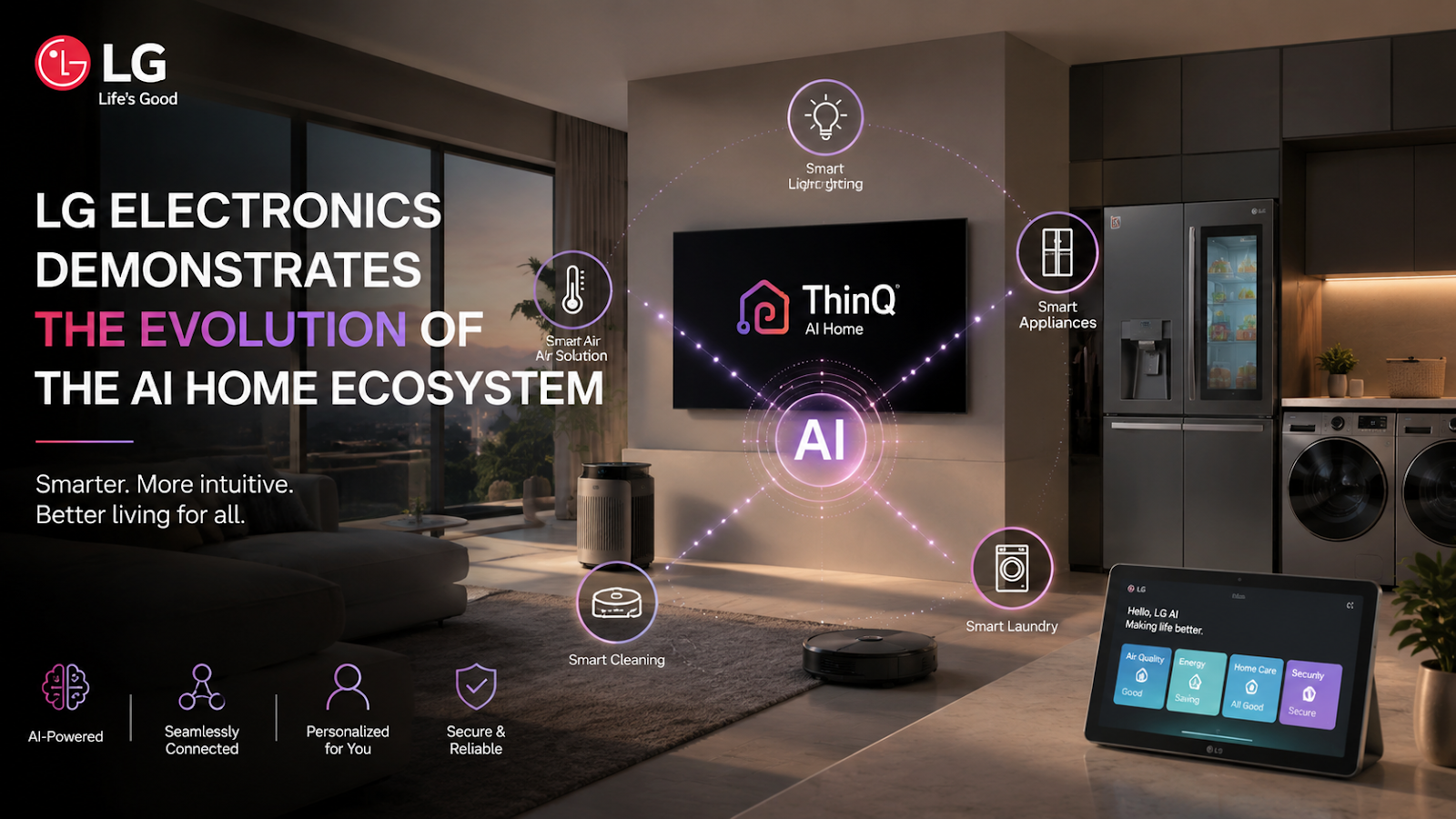
LG Electronics has outlined its ambitious vision for the future of smart homes, introducing an evolving AI Home ecosystem designed to reduce household chores, personalize daily experiences, and move consumers closer to what it calls a “Zero Labor Home.”
At the center of LG’s strategy is its concept of “Affectionate Intelligence”, an AI framework aimed at understanding household routines, anticipating user needs, and proactively managing connected devices. The ecosystem combines AI-powered appliances, the ThinQ AI platform, and autonomous home robots to create a highly connected and intelligent living environment.
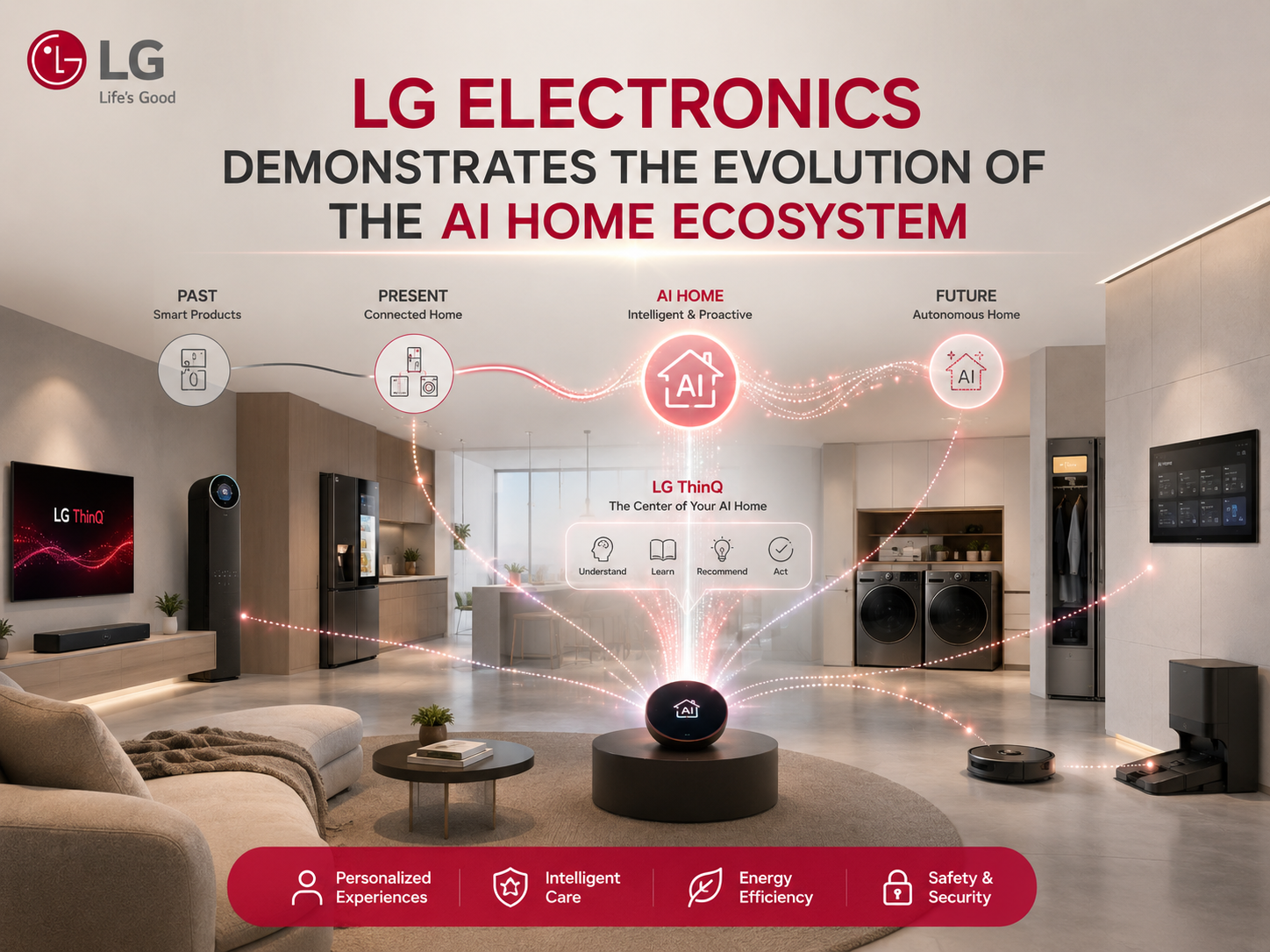
According to LG, future homes will move beyond simply connecting devices and instead function as intelligent environments capable of learning behaviors and making decisions on behalf of users. The company says its AI Home ecosystem is built on three key pillars: AI-powered appliances, ThinQ AI orchestration, and autonomous home robots. Together, these technologies form what LG describes as the ThinQ AI Universe, a platform designed to coordinate devices and services seamlessly across the home.
The first pillar focuses on AI-enhanced appliances that can adapt to usage patterns and optimize performance. LG highlighted examples such as refrigerators capable of adjusting cooling cycles automatically to improve freshness while reducing energy consumption. The second pillar, ThinQ AI Orchestration, acts as the central intelligence layer, enabling appliances and services to communicate and respond through natural interactions. Meanwhile, autonomous home robots are envisioned as physical AI assistants capable of performing everyday household tasks.
LG also outlined the evolution of its ThinQ platform. What began as a remote-control solution for connected appliances has progressed to over-the-air software updates and predictive maintenance capabilities. The next phase introduces a generative AI-powered ecosystem integrated with Homey, supporting more than 50,000 devices across hundreds of brands to create a more personalized and automated smart home experience.
The company believes India is emerging as a key market for premium AI-enabled appliances. Rising household incomes, rapid urbanization, and growing interest in smart living solutions are driving demand for connected home technologies. LG says categories such as large-capacity and front-load washing machines are witnessing strong momentum as consumers increasingly prioritize convenience, hygiene, energy efficiency, and AI-powered features.
Young Min Hwang, Vice President of Home Appliance Solution at LG Electronics India, said Indian consumers are actively seeking intelligent and connected products that bring them closer to the vision of a fully automated home. He noted that premium appliances featuring advanced AI capabilities are seeing increasing adoption across product categories.
One of the most futuristic elements of LG’s roadmap is LG CLOiD, a home-focused autonomous AI robot unveiled at CES 2026. Equipped with advanced spatial vision technology, the robot is designed to navigate homes independently and perform physical tasks. Integrated with the ThinQ ecosystem, CLOiD can coordinate with household appliances, such as starting laundry cycles or preparing clothing and towels ahead of a homeowner’s arrival.
To support the expansion of its AI Home ecosystem in India, LG is leveraging its local manufacturing footprint. The company’s facilities in Greater Noida and Pune are being aligned with its global AI roadmap, enabling localized production of next-generation AI-powered appliances including washing machines, refrigerators, air conditioners, and kitchen solutions.
As competition intensifies in the smart home market, LG’s latest vision signals a shift from connected appliances toward fully integrated AI ecosystems that not only respond to user commands but actively anticipate needs. Whether the “Zero Labor Home” becomes a reality remains to be seen, but LG is clearly positioning itself at the forefront of the next generation of intelligent living.