Memory Costs Surge as Smartphone Prices Continue to Rise, Warns Nothing CEO
Nothing CEO Carl Pei says memory has become the most expensive component in smartphones, driving device prices higher globally and potentially reducing discounts during the upcoming sale season.
Smartphone prices are likely to keep increasing through next year as memory chips become the most expensive component inside modern smartphones, according to Nothing founder and CEO Carl Pei.
In a recent social media post, Pei highlighted the growing impact of memory costs on smartphone manufacturing, claiming that memory now costs more than processors and displays and can account for over 50 percent of a device’s total hardware bill.
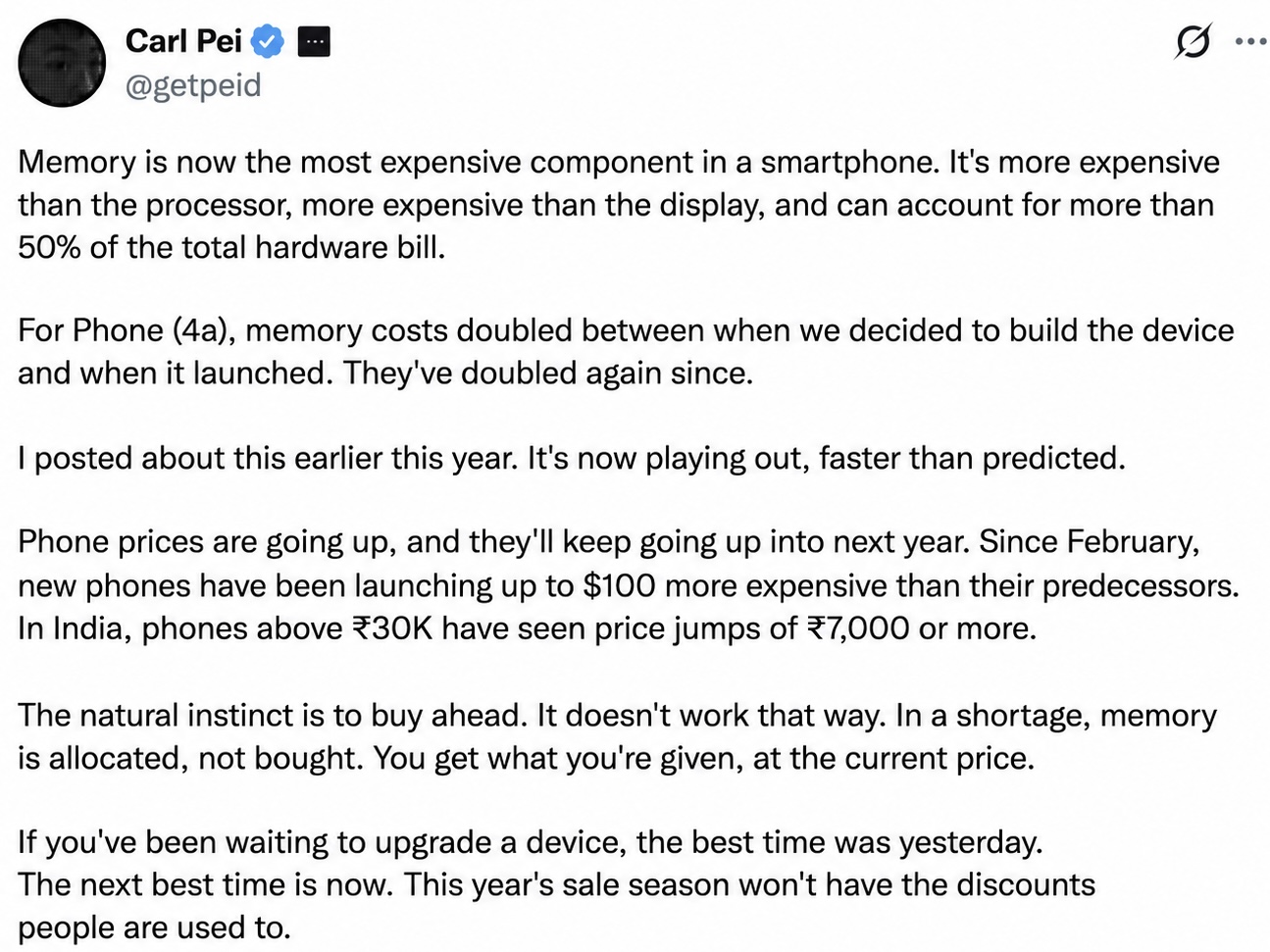
According to Pei, the trend has accelerated far faster than industry expectations. He revealed that memory costs for the Nothing Phone (4a) doubled between the time the device was planned and its eventual launch. Since then, those costs have reportedly doubled again, further increasing pressure on smartphone makers.
The executive suggested that the rising prices are already being reflected in retail smartphone pricing across global markets.
“Phone prices are going up, and they’ll keep going up into next year,” Pei said, noting that several new smartphones launched since February have debuted at prices up to $100 higher than their predecessors.
India, one of the world’s largest smartphone markets, is also feeling the impact. Pei claimed that smartphones priced above ₹30,000 have seen price increases of ₹7,000 or more compared to previous generations.
The situation is being driven by tight memory supply and growing demand for higher-capacity storage and RAM configurations, particularly as artificial intelligence features become more common on smartphones. In such an environment, Pei argues that manufacturers cannot simply purchase more memory at previous rates.
“In a shortage, memory is allocated, not bought,” he explained, suggesting that suppliers determine availability based on market conditions rather than customer demand alone.
Pei also cautioned consumers against expecting deep discounts during upcoming festive sales, arguing that rising component costs may limit the aggressive price cuts typically seen during major shopping events.
For consumers planning to upgrade, the message was clear: waiting may not necessarily result in lower prices. As memory costs continue to climb, smartphone manufacturers could be forced to pass additional costs on to buyers over the coming months.