Snap Unveils Specs: Its Biggest Bet Yet on an AI-Powered Future Beyond Smartphones
Snap has unveiled Specs, its most ambitious augmented reality glasses yet, combining AI-powered assistance, immersive AR experiences, hand tracking, and standalone computing in a wearable form factor. Priced at $2,195, the device marks Snap’s biggest bet on a future where smart glasses could eventually replace smartphones as the primary way people interact with technology.
At Augmented World Expo (AWE) 2026, the company unveiled Specs, its first consumer-focused augmented reality glasses, marking the culmination of more than a decade of investment in wearable computing and augmented reality. Snap says the new device is designed to bring AI assistance, entertainment, productivity tools, and social experiences directly into a user’s field of view without requiring them to constantly look down at a smartphone.
The launch represents one of the most ambitious attempts yet to create a mainstream augmented reality platform. While companies including Apple, Meta, and Google have all entered the race to redefine computing beyond smartphones, Snap believes augmented reality glasses are the most natural evolution of personal technology.

A Computer Built Into Glasses
Snap describes Specs as a “wearable computer” integrated into a pair of see-through augmented reality glasses. Unlike traditional smart glasses that focus primarily on cameras or notifications, Specs are designed to overlay digital information directly onto the real world.
The glasses feature a 51-degree field of view, support 16 million colors, and use transparent lenses capable of displaying immersive AR experiences while allowing users to remain aware of their surroundings. The lenses can also transition from clear to tinted in roughly ten seconds, helping users adapt to changing lighting conditions.
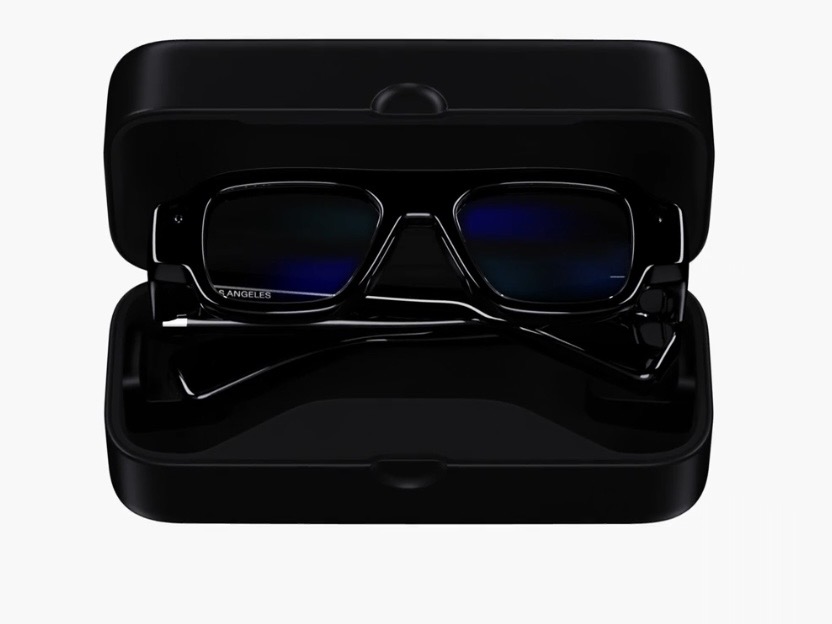
Under the hood, Specs are powered by dual Snapdragon processors, with one chip dedicated to computer vision tasks and another handling augmented reality experiences. The company says the device delivers up to four hours of active use, while a bundled charging case extends total usage to approximately 20 hours.
The glasses also support hand tracking, voice interaction, and AI-powered contextual assistance, enabling users to interact with digital content without needing to pull out a phone.
AI at the Center
The company says the glasses are designed to understand what users see and provide assistance based on their surroundings. Whether it is navigating a city, measuring physical objects, consuming content, or accessing contextual information, Snap wants AI to function as a proactive assistant that operates naturally within the environment around the user.

Snap CEO Evan Spiegel has repeatedly argued that future computers should work more like humans do—through sight, sound, movement, and context rather than taps and text inputs. Specs are the company’s attempt to bring that vision to life.
The platform runs on Snap OS, the company’s operating system for spatial computing experiences, and builds upon years of development through earlier Spectacles hardware aimed primarily at developers.
The Price of the Future
Snap has priced the glasses at $2,195, placing them significantly above Meta’s Ray-Ban smart glasses and closer to premium mixed-reality hardware. Customers can currently reserve the device with a refundable deposit, with shipments scheduled to begin this fall in the United States, United Kingdom, and France.
Industry reaction has been mixed. While many analysts acknowledge the technological achievement of creating fully standalone AR glasses, concerns remain about mass-market adoption due to the high cost, relatively bulky design, and the broader challenge of convincing consumers that augmented reality glasses are a must-have device.
Snap’s Most Important Hardware Launch Yet
The company has reportedly invested billions of dollars into augmented reality over the past decade, betting that wearable computers will eventually replace smartphones as the primary way people interact with technology. The launch arrives at a time when Meta is expanding its AI-powered smart glasses strategy, Google is reviving its ambitions through Android XR, and Apple continues to push spatial computing with Vision Pro.
Whether Specs become a mainstream success remains uncertain. What is clear, however, is that Snap is no longer content being viewed solely as the company behind Snapchat. With Specs, it is making its strongest case yet that the next computing platform could be something users wear on their faces rather than carry in their pockets.